
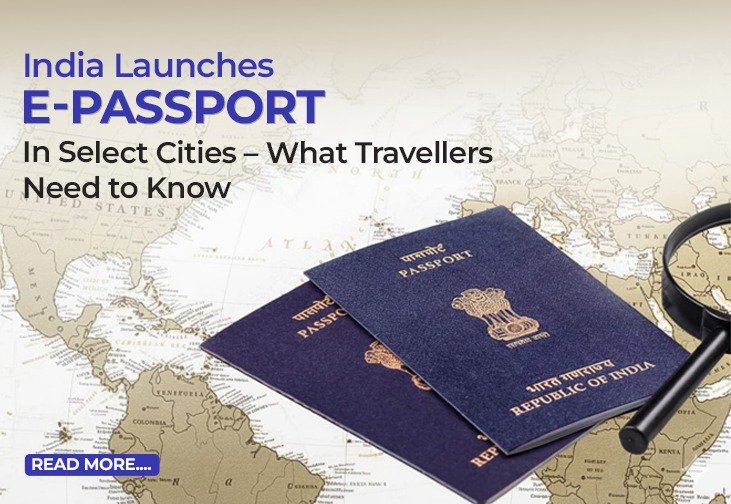
India has officially started issuing electronic passports, or e-passports, at select passport offices across the country. This rollout is part of the government’s initiative to modernize travel documents while enhancing security and aligning with global standards.An e-passport looks similar to the regular passport but includes an embedded RFID chip. This chip securely stores the passport holder’s personal details and biometric information. A gold-coloured chip symbol on the cover helps in quick identification of the e-passport. These features are designed to improve document security and facilitate faster processing at immigration checkpoints.
Currently, e-passports are being issued at select Indian cities, including Chennai, Hyderabad, Bhubaneswar, Surat, Nagpur, Goa, Jammu, Shimla, Raipur, Amritsar, Jaipur, and Ranchi. Applicants can still receive a regular passport at offices where the e-passport facility is not yet available. Existing passports remain valid until their expiry and do not need to be replaced solely due to the e-passport launch.
For Indian citizens applying for passports through overseas missions, such as in the UAE, the introduction of e-passports does not require fresh biometric data collection. The application fees remain the same, and there is no change in the issuance procedure.
Key points for travellers:
• Check whether your local passport office issues e-passports before applying.
• Existing passports remain valid; replacement is not mandatory.
• The e-passport ensures better security and smoother immigration checks.
• Application procedures and charges remain unchanged.
The launch of e-passports marks a step toward modernizing India’s travel documentation system. While most applicants may not notice immediate differences in procedure, the embedded technology significantly strengthens passport security, ensuring safer international travel for Indian citizens.